
Aquaponics Farming
Aquaponics Farming
A combination of hydroponics and aquaculture, where plants are grown in a system that also raises aquatic animals like fish. The nutrient-rich water from the fish tank fertilizes the plants, while the plants help clean the water for the fish.
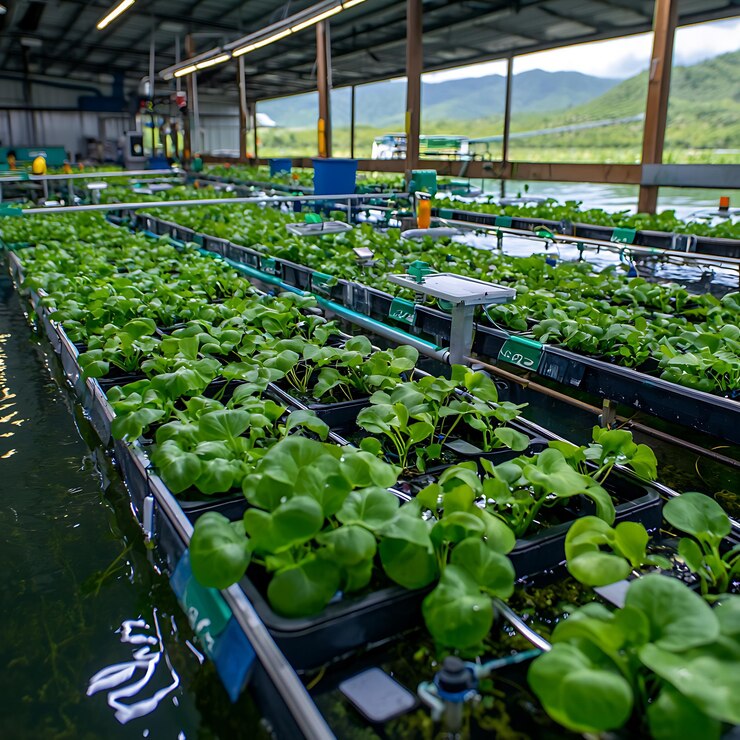
Aquaponics offers several advantages: it uses significantly less water than traditional farming, requires no chemical fertilizers, and can produce both vegetables and protein (fish) in a compact space. This system is ideal for urban farming, home gardening, and commercial operations alike. Common fish used include tilapia, catfish, and koi, while suitable crops range from leafy greens and herbs to tomatoes and cucumbers. However, maintaining the balance between the fish, plants, and bacteria is crucial for a healthy system, as changes in water quality or temperature can affect the entire ecosystem.
How You Start Aquaponics Farming
Aquaponics farming is an eco-friendly method that combines hydroponics (growing plants without soil) and aquaculture (raising fish) in a single integrated system. In this closed-loop setup, fish waste provides nutrients for plants, while the plants naturally filter and purify the water for the fish. It's an efficient, sustainable way to grow food and conserve resources. Here's how you can get started:
- 1. Understand the Basics: Learn how aquaponics works and the symbiotic relationship between fish, plants, and beneficial bacteria. This knowledge is essential for balancing the ecosystem.
- 2. Choose the Right System Type: Decide between media bed, nutrient film technique (NFT), or deep water culture (DWC) systems. Media bed systems are ideal for beginners due to their simplicity and stability.
- 3. Select Fish and Plants: Pick fish like tilapia, catfish, or koi that are hardy and easy to care for. Start with leafy greens, herbs, or fast-growing vegetables that adapt well to aquaponic conditions.
- 4. Build or Buy a System: Set up fish tanks, a grow bed, a water pump, biofilter, and plumbing to circulate water between the tanks and plants. Ensure everything is food-safe and watertight.
- 5. Establish the Nitrogen Cycle: Cycle the system without fish at first to allow beneficial bacteria to develop. These bacteria convert fish waste into nutrients that plants can absorb.
- 6. Add Fish and Plants: Once the nitrogen cycle is stable, introduce fish gradually and plant your crops. Monitor water parameters such as pH (6.8–7.2), ammonia, nitrites, and nitrates regularly.
- 7. Monitor and Maintain the System: Feed fish appropriately, check water quality daily, and look out for signs of plant or fish stress. Clean filters and ensure the water pump runs smoothly.
- 8. Harvest: Harvest plants when ready and, if desired, harvest fish at the end of their growth cycle. Enjoy a dual yield of fresh vegetables and fish from a single system.